HITRANS Makes it Four in a Row at National Transport Awards
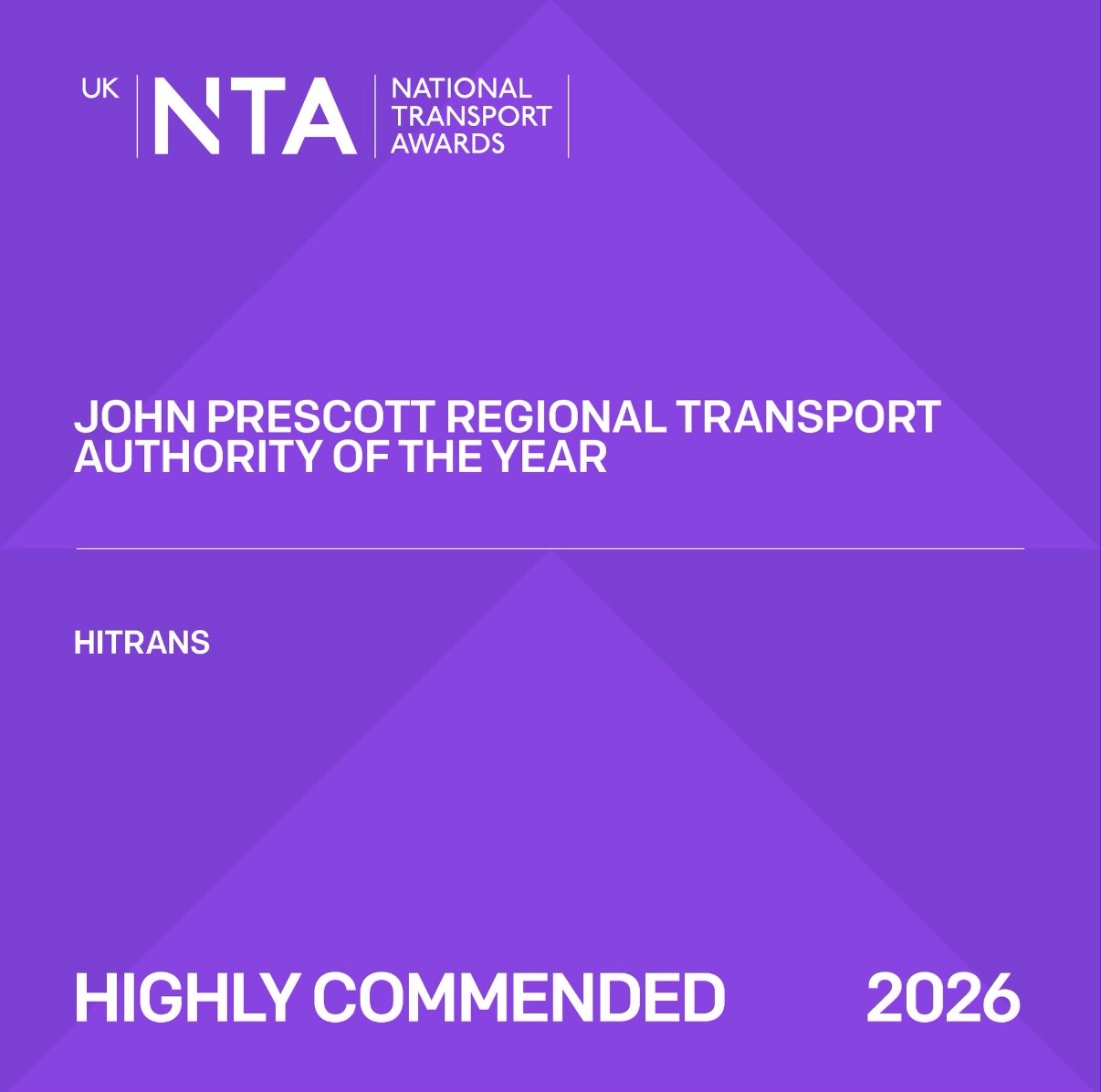
The transport partnership for the Highlands and Islands has been recognised nationally for the fourth consecutive year for helping to make travel in the region more affordable, sustainable and integrated. HITRANS was again highly commended in the John Prescott Regional Transport Authority of the Year category at the prestigious UK-wide Transport Times National Transport Awards. The partnership was shortlisted alongside transport authorities across the country for work throughout its unique rural and island region. HITRANS covers around half of Scotland’s land area, including Argyll and Bute, Highland, Moray, Orkney and the Western Isles. The commendation recognises what a relatively small organisation can achieve through partnership working in a region where transport is essential to accessing employment, education, healthcare and everyday services.
HITRANS chair, Councillor Uisdean Robertson, said: “We are delighted to have been highly commended in this prestigious category for the fourth year in a row. To receive this recognition alongside transport authorities from across the UK is a tremendous tribute to our small, dedicated team and the partners we work with. In the Highlands and Islands, transport connectivity shapes people’s opportunities and quality of life. Long distances, island geography and the cost of travel can make it harder to reach work, education, healthcare and the services that others take for granted. Our work is about making a practical difference to those journeys. From helping people travel more affordably by bus, to supporting walking, wheeling and cycling, and developing cleaner aviation for our lifeline routes, we are delivering a wide range of activity with a real impact across our region. This commendation is recognition of that collective effort, and I want to thank our staff, delivery partners, local authorities, funders and transport operators for everything they contribute.”

Among HITRANS’ recent achievements is the regional £2 bus fare cap pilot, which it delivered with ZetTrans and Transport Scotland and participating operators earlier this year. Early evidence shows the cap is reducing travel costs and stimulating additional use of public transport. It makes longer rural journeys more affordable and gives passengers greater certainty over travel costs. More than 1.5 million journeys were made across the Highlands and Islands by the end of August 2026, with reported average passenger savings of more than £6 per journey. Bus trips across the region are reported to be 36% higher year on year. Formal evaluation will establish how much of that growth is attributable to the fare cap. Following the scheme’s extension to Strathclyde in September, journeys eligible through journeys between the two fare-cap regions, such as Oban to Glasgow, now cost a maximum of £4 each way.
HITRANS’ Transport Scotland-funded People and Place programme, supporting walking, cycling, wheeling and sustainable travel, reached more than 26,000 participants in 2025-26. It has seen new or upgraded facilities at 59 locations, checks and repairs to 1,783 bikes, and 353 cycles refurbished and rehomed free or at low cost. Inclusive cycling projects helped people access cycles suited to their needs, while school and workplace initiatives supported more active everyday journeys.
In addition, HITRANS is involved in two new sustainable aviation projects after securing new funding. This comes from its leadership of the Sustainable Aviation Test Environment (SATE) programme, which established the UK’s first operational low-carbon aviation test centre at Kirkwall Airport. Project SEAN, the Scottish Electric Aviation Network, has secured £1.5 million, and the SATE Hydrogen Roadmap, was awarded £190,081. Funded by the Department for Transport through a competition delivered by Innovate UK, the projects will support electric aircraft demonstration flights from Inverness and explore how hydrogen-powered aircraft could serve regional routes. These projects are early steps in delivering HITRANS’ recently-published Regional Sustainable Aviation Strategy, a ten-year roadmap to help translate emerging technologies into cleaner, reliable air connections for remote and island communities.